
“It is a joy to be hidden, and a disaster not to be found” D.W. Winnicott
The Milburn Psychology Practice approach in working with children, adolescents, and families is based on an understanding that all human experience is fundamentally interpersonal. Children and young people are most usefully understood in the context of their relationships, their families, and schools.
The practice works with children and young people with a wide range of difficulties, including: problems with peer relationships, underachievement at school, aggressive outbursts or tantrums, insecurity and lack of confidence, learning difficulties, disabilities or more serious mental health conditions including: self-harm, eating disorders, oppositional behaviour, depression, anxiety. The practice also treat children who are suffering the effects of neglect, abuse and poor attachment.
Assessment
The initial assessment is an opportunity to discuss what concerns and experiences have brought you to seek support and to reach an understanding of the difficulties you and your child/children are experiencing. Based on a psychological assessment of your child’s functioning, Dr Milburn will discuss with you whether further assessments or treatment, in the form of Psychotherapy would be helpful.
Psychotherapy treatment
Extensive outcome research and clinical experience has established that the foundation of therapy, what ever the model, is the relationship with a trusted, specially trained therapist who can help children deal with the causes of distress and help them acquire the psychological skills to cope more adaptively in the future. Young children often communicate through play, where the use of toys, drawing, stories and other mediums help your child to identify, explore and express their feelings. Older children and adolescents may prefer to just talk.
Through the therapeutic relationship with Dr Milburn in a consistent setting, that is safe and non-judgmental you may begin to feel able to express your troubling thoughts and conflicted feelings. Confused, frighten, hurt ,angry or painful feelings can gradually be put into words rather than actions. Dr Milburn can help you make sense of your own experience. By being understood, you can find new and healthier ways of managing your difficulties and lasting changes in your emotional states and behaviour.
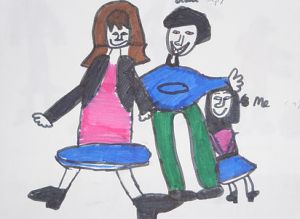
Consultations during while your child is in psychotherapy
Psychotherapy with children and adolescents is a collaborative endeavour with parents or caregivers. In the course of your child’s psychotherapy I will meet regularly with you to discuss the work. You may also contact me at any time to let me know of any concern or progress. An ongoing dialogue between you and I is an important part of your child’s psychotherapy.
Therapeutic support for parents and carers
Dr Milburn’s aim is to provide parents and carers with the skills and techniques, underpinned by the most up to date evidence-based therapeutic interventions, to help troubled children, young people and families recover and thrive. He provides practical guidance and therapeutic support to parents and carers on the above issues, as well as the following:
• Practical guidance on managing sleep, eating, crying and emotional tantrums in toddlers and young children
• Psychological guidance on understanding and managing attachment difficulties and distress in the family
• Family and couple relationship difficulties, changing family structures
• Parental mental health difficulties and their impact on children and families
Adolescent Services

Adolescence can be an extremely turbulent time for a you and your parents. It can be helpful for a you to have a confidential space in which you are able to talk about your worries and concerns, for example peer and parent relationships, self-identity or exam stress. You may want to talk to someone that is not a friend, parent or a teacher. In this situation seeing an unbiased clinical psychologist like Dr Milburn can be helpful and effective.
The young person might be:
- Feeling unhappy, worried or frightened for reasons they cannot explain
- Having difficulty at school or at home
- Be unable to channel his or her energy and creativity into ways that develop their potential
- Having difficulty making friends or getting along with others in school or in their family
- Might be acting aggresively to others and wondering why and how to cope with this behaviour
- Having problems with their identity and self-image
- Having problems with anxiety
- Feeling depressed or suicidal and needing someone to talk to
These behaviours and feelings can interfere with a young person’s sense of well-being and their capacity for their own emotional, social and intellectual development.
What will happen at the appointment?
The purpose of this initial assessment is to reach an understanding of the difficulties the young person is experiencing and to develop a plan to resolve these. Sometimes it is possible to reach this point at the end of the initial assessment appointment but often one or two further assessment appointments may be required. A decision may be made to attend psychotherapy.
What happens in psychotherapy?
Psychotherapy is not the same as giving advice or telling you what to do. Instead, Dr Milburn will help you to understand the issues that are worrying you so that you can decide for yourself how best to deal with them. In the sessions, which are normally weekly, you can talk about whatever you need to without being judged, and in the knowledge that what you say will remain confidential. Individual sessions will usually last fifty minutes and take place in a comfortable and private setting. How many times you will need to come will depend on what is helpful to you.
 Milburn Psychotherapy & Psychology Practice